
I have completed an experiment with running the Ryobi power station on Ridgid 18V batteries. The mechanical fit worked as expected, using 3D printed adapters (thanks to Simhopp and itnaanti). The electrical handshake took some figuring out, and the adapter took some modification to allow for the addition of a resistor that made it work.
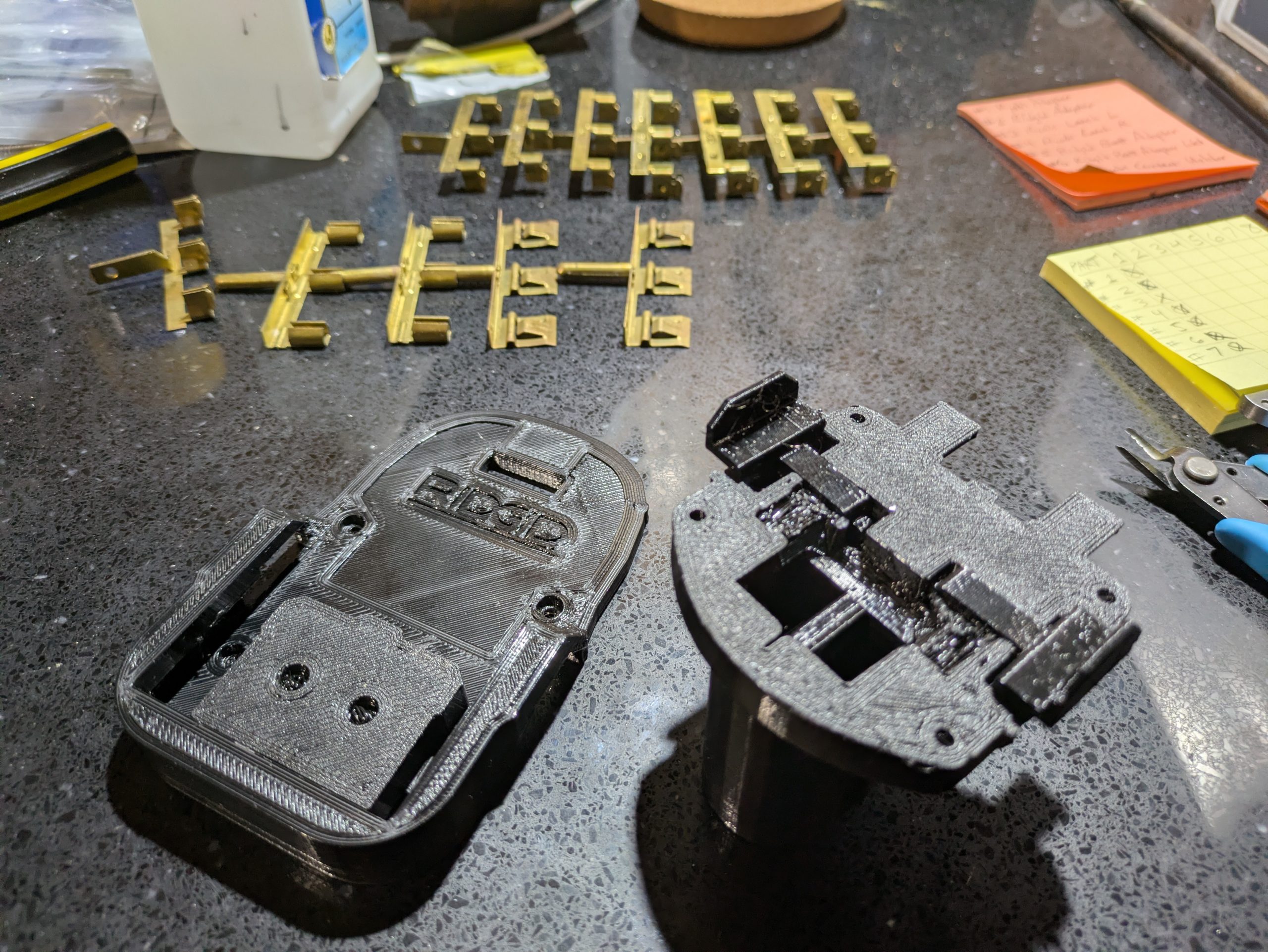
The power contacts in the adapters are harvested brass from outlet expanders and power strips. Free parts, already mostly the right shape.
For many Ryobi tools, I’ve read that the simple two-contact power connection through the adapter works fine - and I’ve seen it work on the Ryobi stick vac. On testing, however, it turned out the power station didn’t like that. Through some research and reading, I found that Ryobi batteries have 4 total contacts, including a third one at the top of the ‘tower’, and then a fourth one by itself down below at the base of the tower. I surmised that the power station may need to see whatever is being provided by the other two possible Ryobi battery contacts before acknowledging the presence of a battery. I guessed it may have been the battery temp, so I set about determining how to achieve that
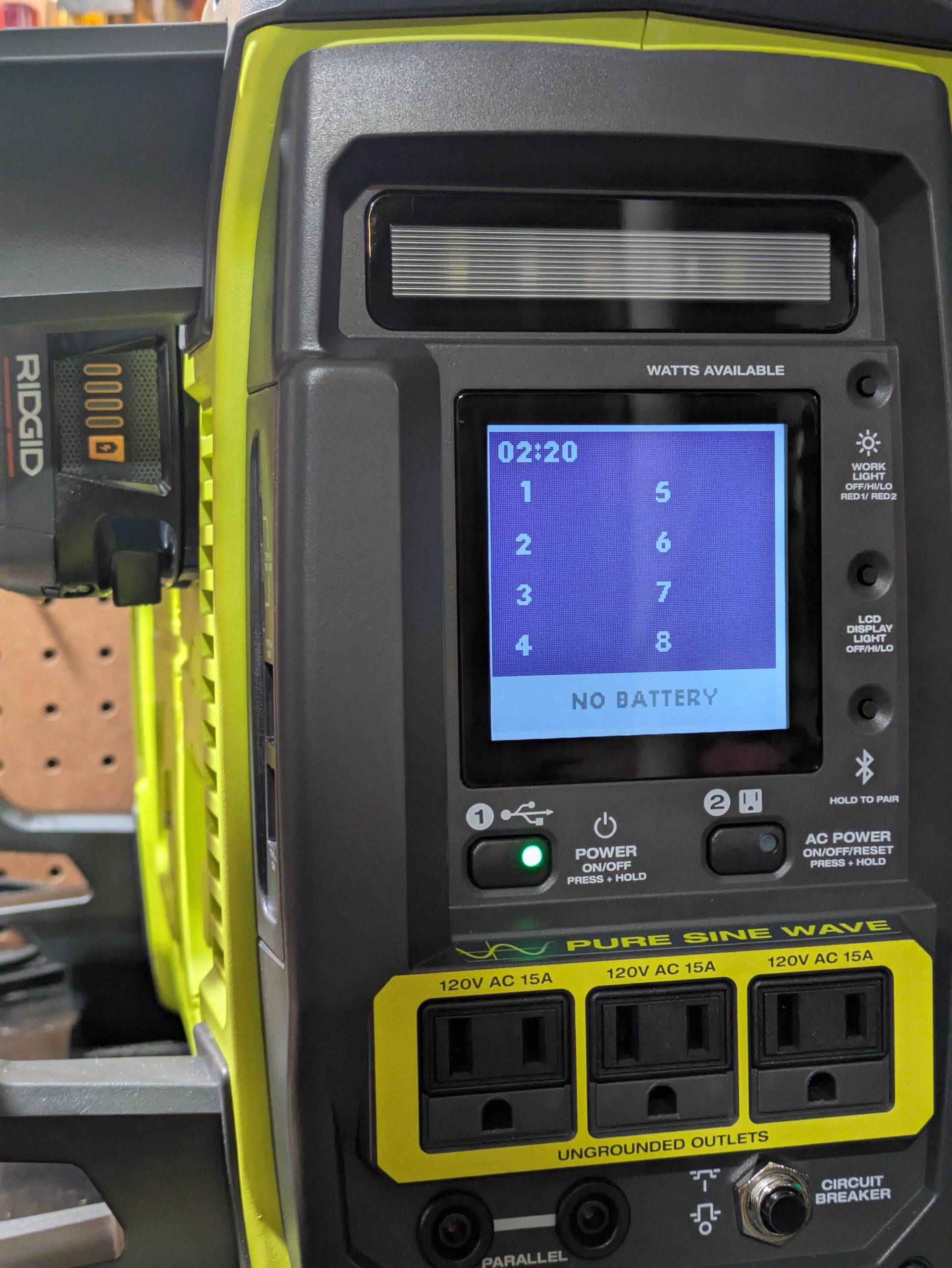
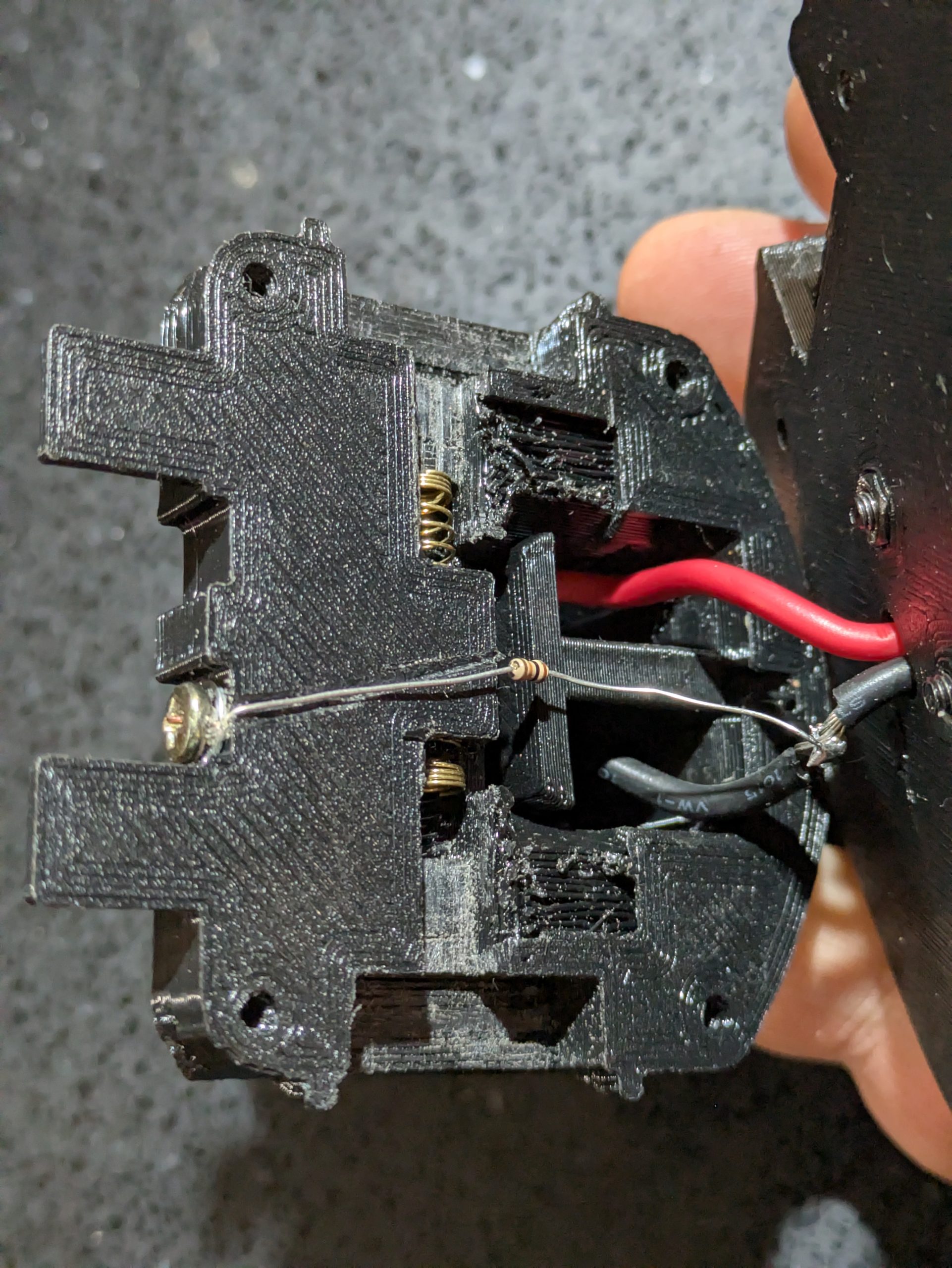
I found references suggesting that a 10k ohm resistor may be the ticket to mimic a room temperature signal from a Ryobi battery. I first tested it on the 3rd contact up top, to no avail - then tested it on the 4th contact at the base, and we had liftoff! After testing, I modified the adapter with a little channel to route the resistor out to the base of the battery insert tower. I soldered the resistor wire to a tiny tooth washer, then drilled in to thread a screw into the plastic. The head of the screw serves as the contact that slides against the little spring blade when inserted in the power station, and sends that Ryobi room temperature signal. Picked up a dozen of the resistors for 10 cents apiece at the local surplus store (long live Ax-Man!).
Note, this arrangement work fine for supplying power to the station, but conventional wisdom is to not mess with charging batteries back through any adapter setup. The risk exists whether the temperature signal gate is present or not, but in this case there’s particular risk because the tool (power station) is requiring the temp signal to work. It would be getting a dummy room temp signal even if a battery was heating up to a dangerous level.
With all of this in place, testing shows the power station functions fully as expected for the power supply direction (again, not using it to charge batteries).
Four batteries unlock 1800W
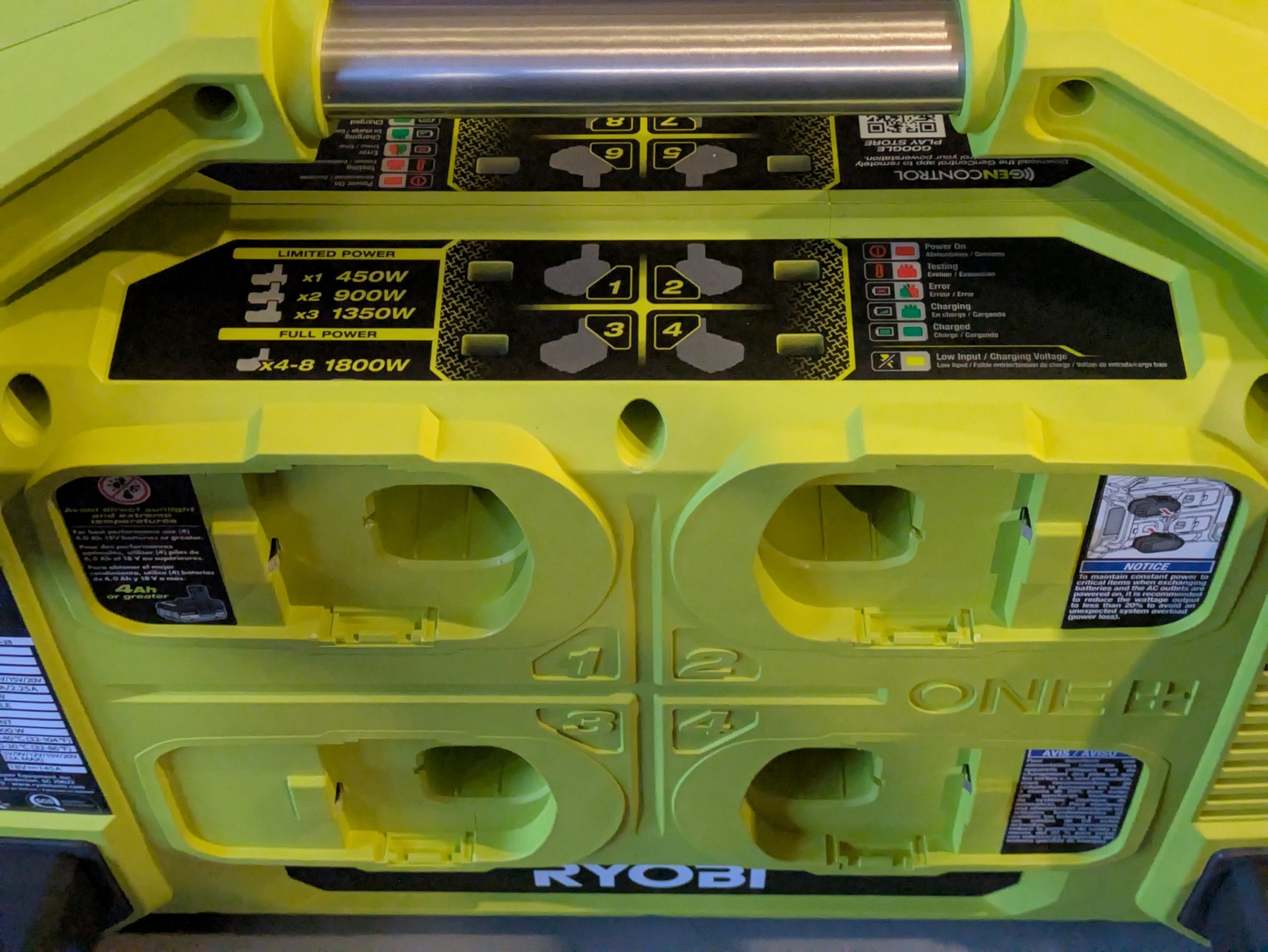
The station meters output by how many batteries are loaded. One battery gets you 450W, two 900W, three 1350W. At four it unlocks the full 1800W, so adding up to eight just buys you runtime, not watts. I’ve run it on a mix of 2Ah and 4Ah packs and it scales as expected.
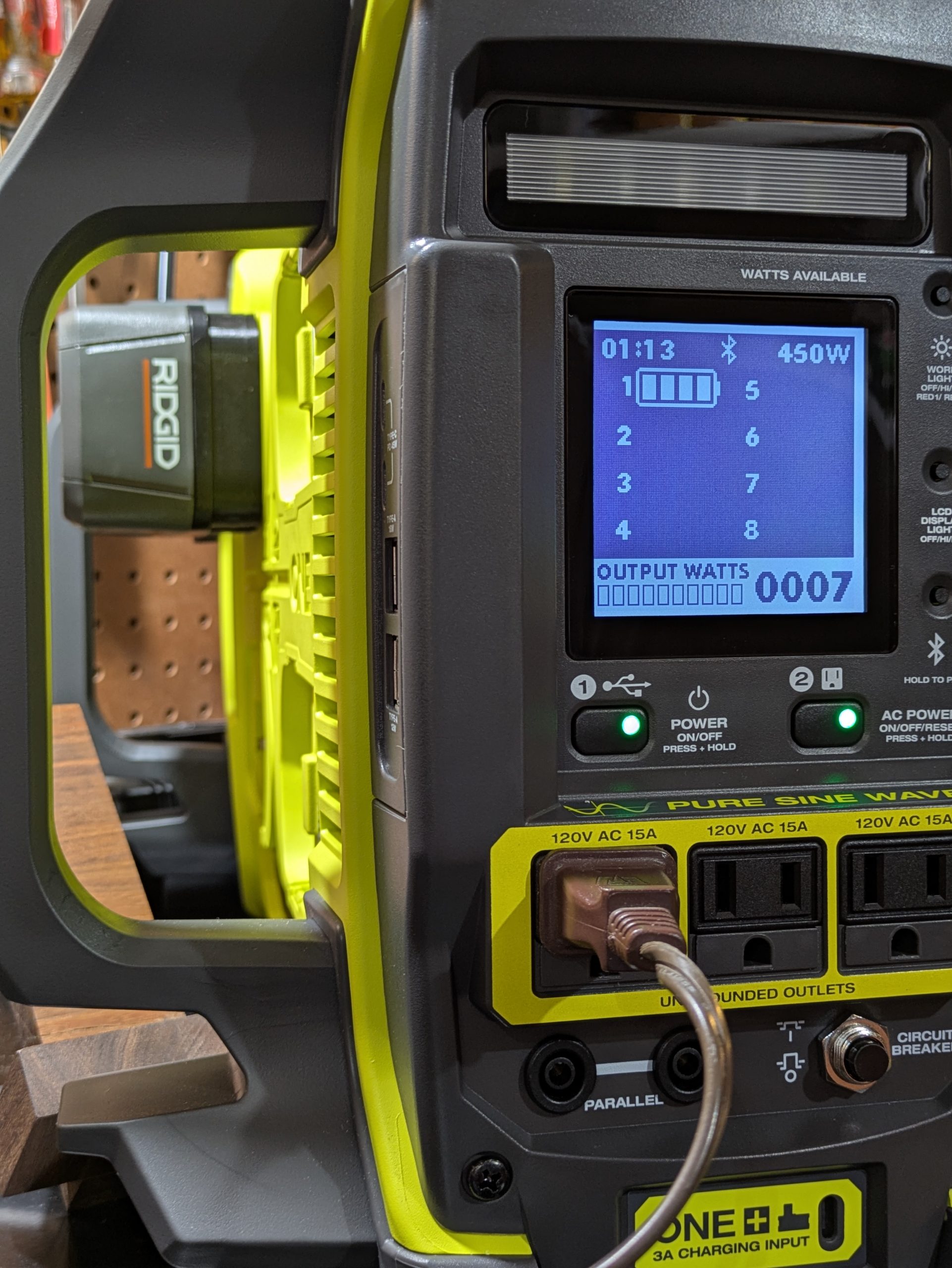
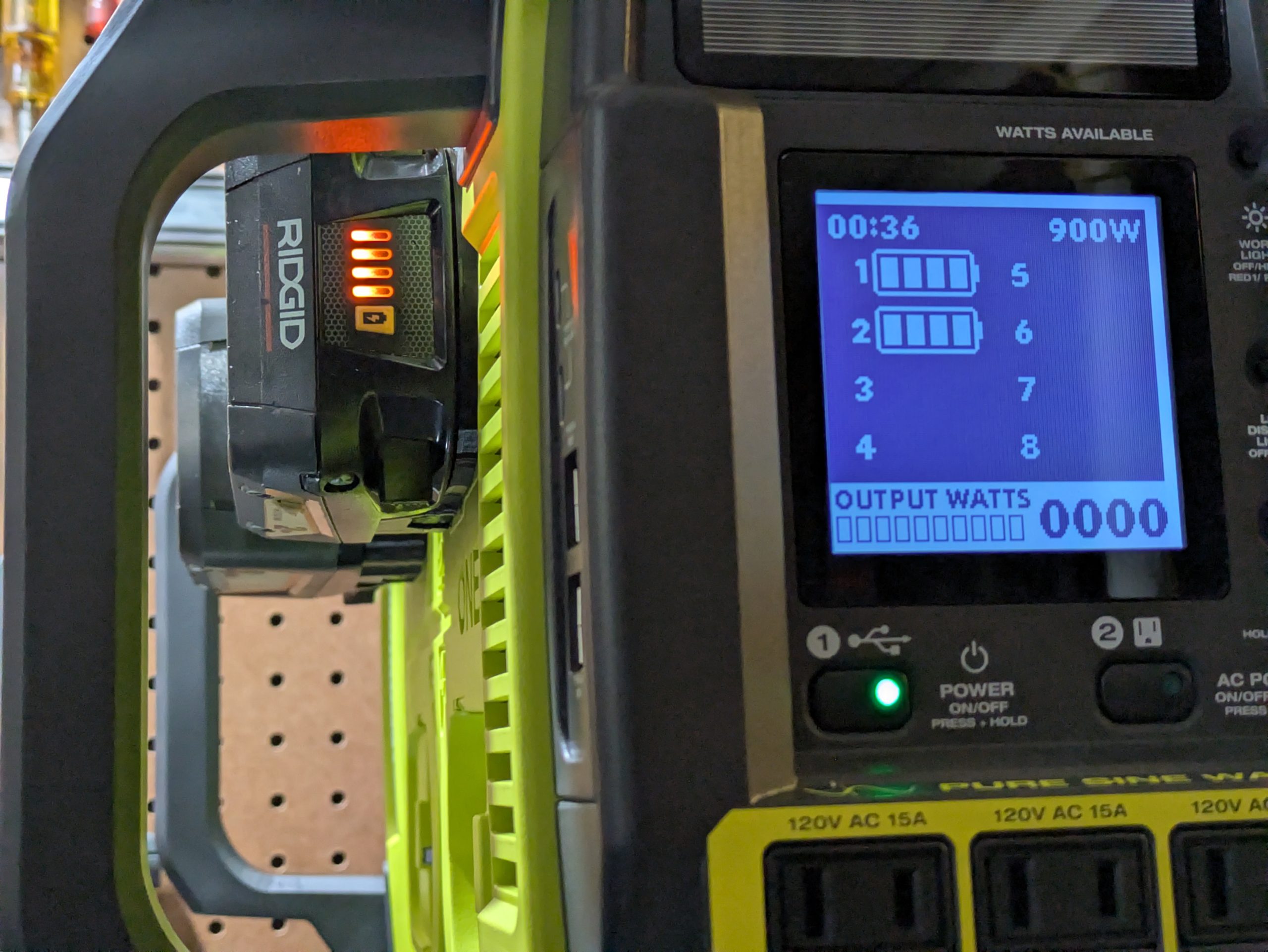
Power supply go for launch!