
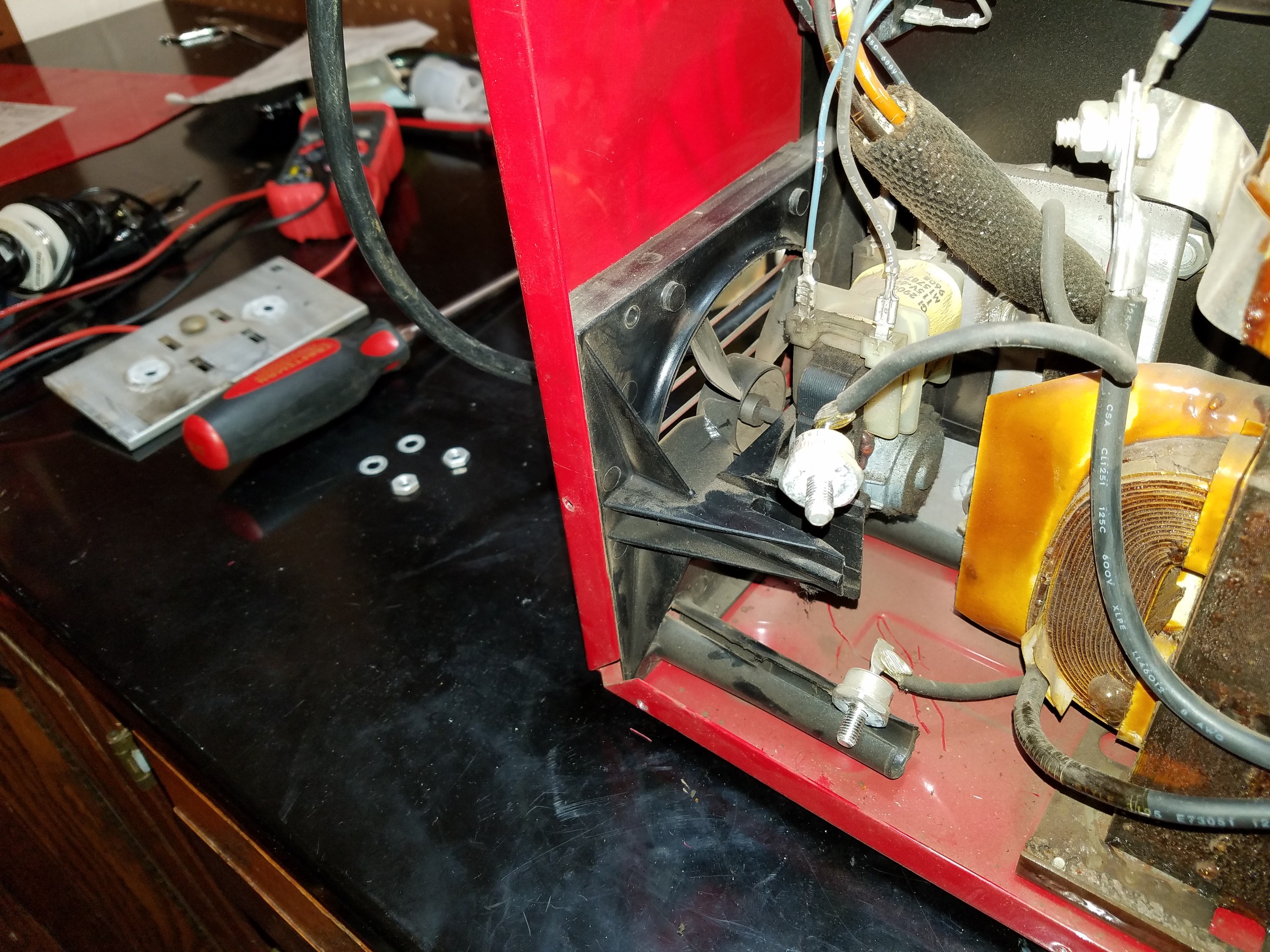
I got this Lincoln Weld-Pak 100 about ten years ago, and it wasn’t working well - low and spotty power, it seemed. The problem turned out to be a diode.
Lincoln puts the wiring diagram inside the case. There isn’t much in a machine like this: a transformer, a selector switch, four diodes, a capacitor, a choke, and a small control board. The four diodes turn the transformer’s AC into DC you can weld with. They are also about the easiest thing in there to check with a meter.
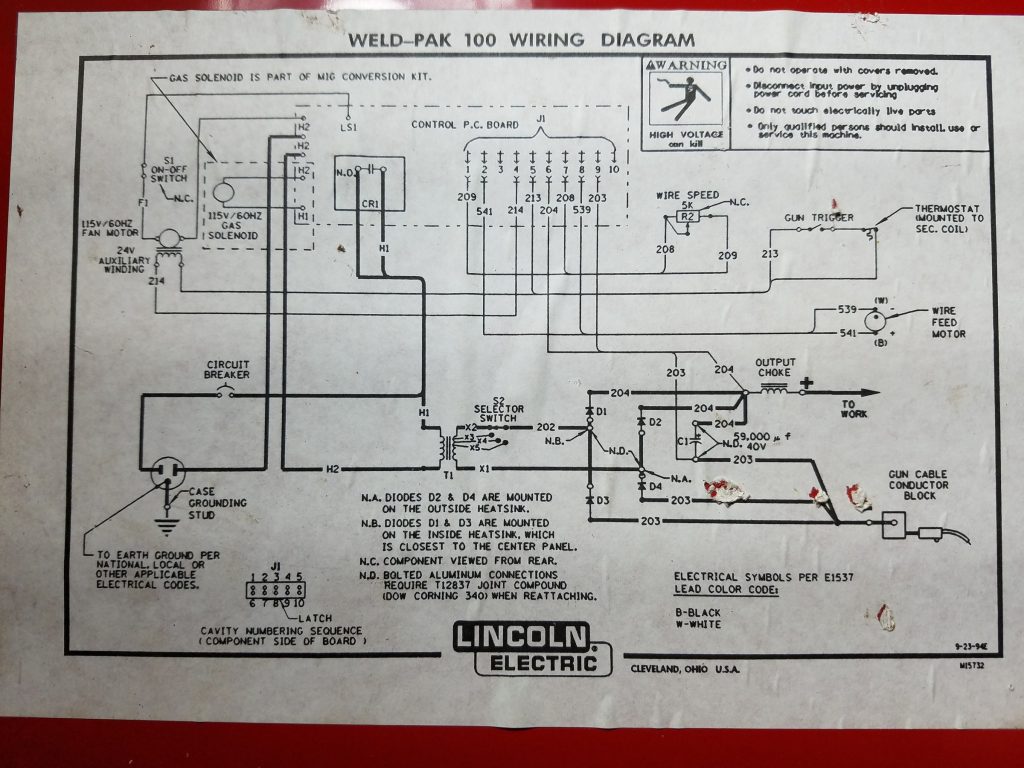
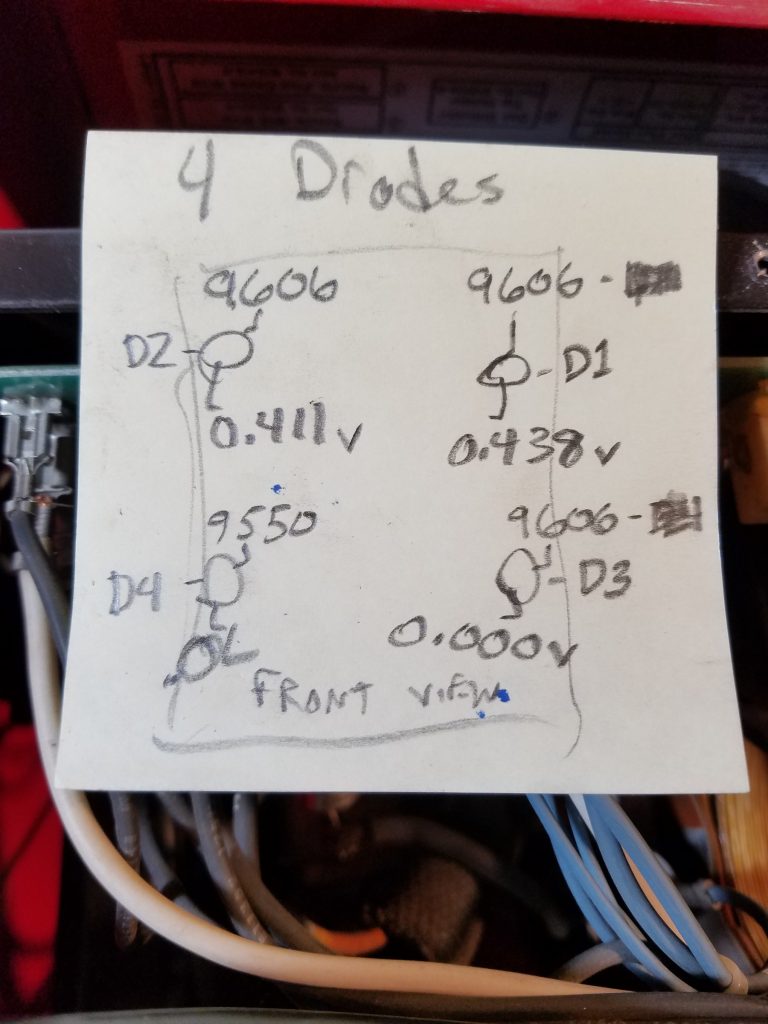
So I wrote down what was stamped on each one, drew a map of where they sit, and put a meter on all four.
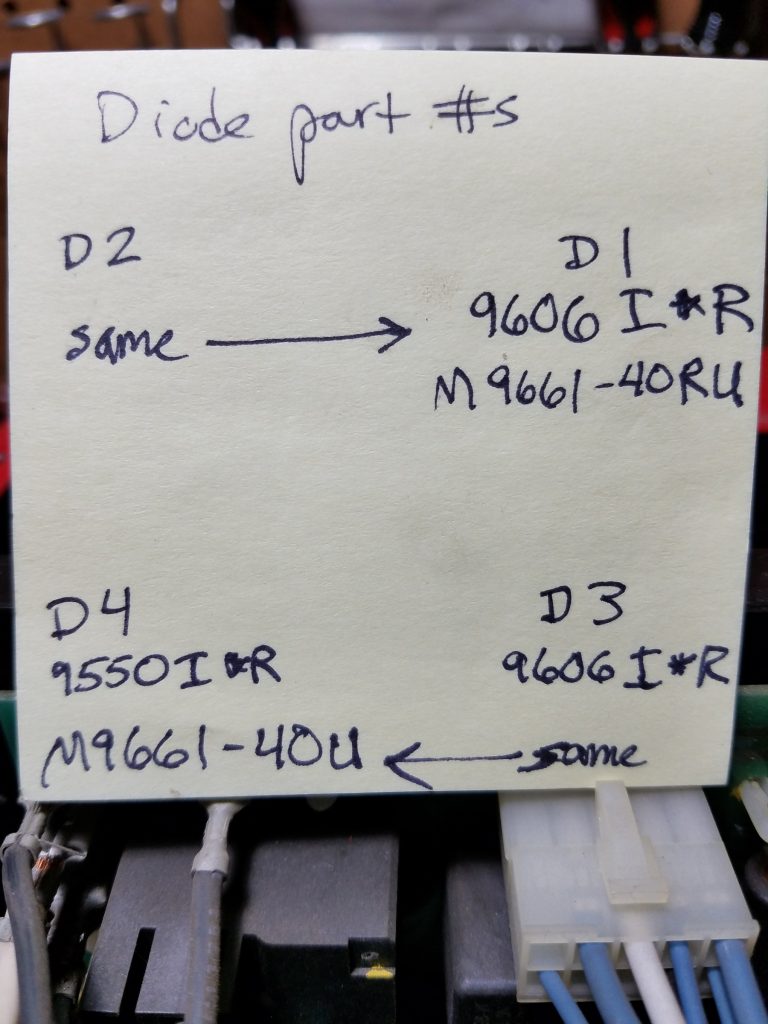
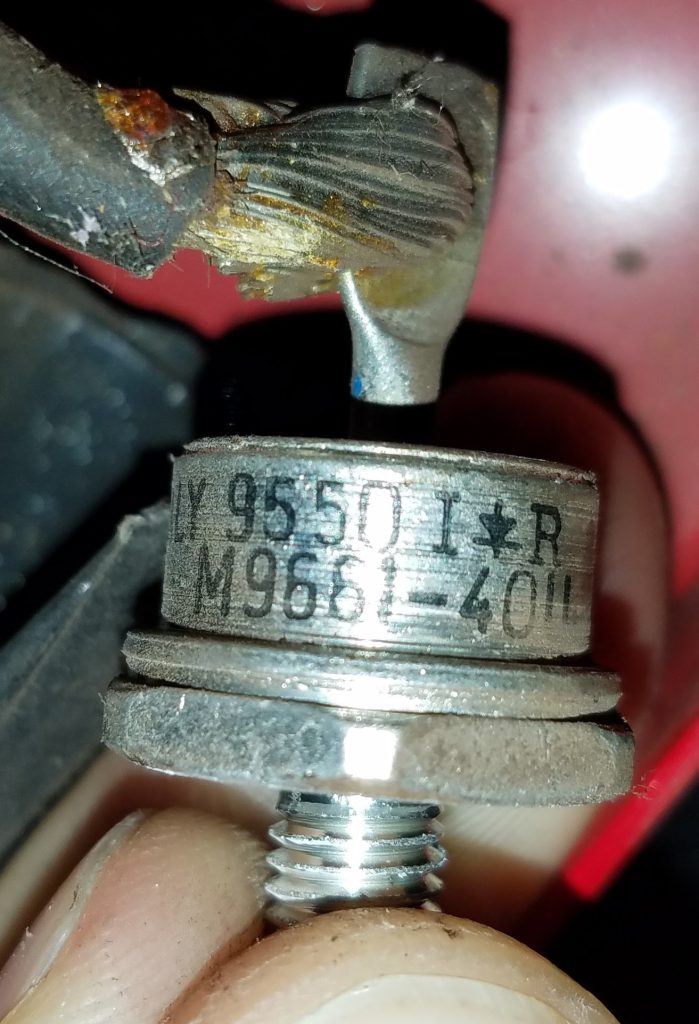
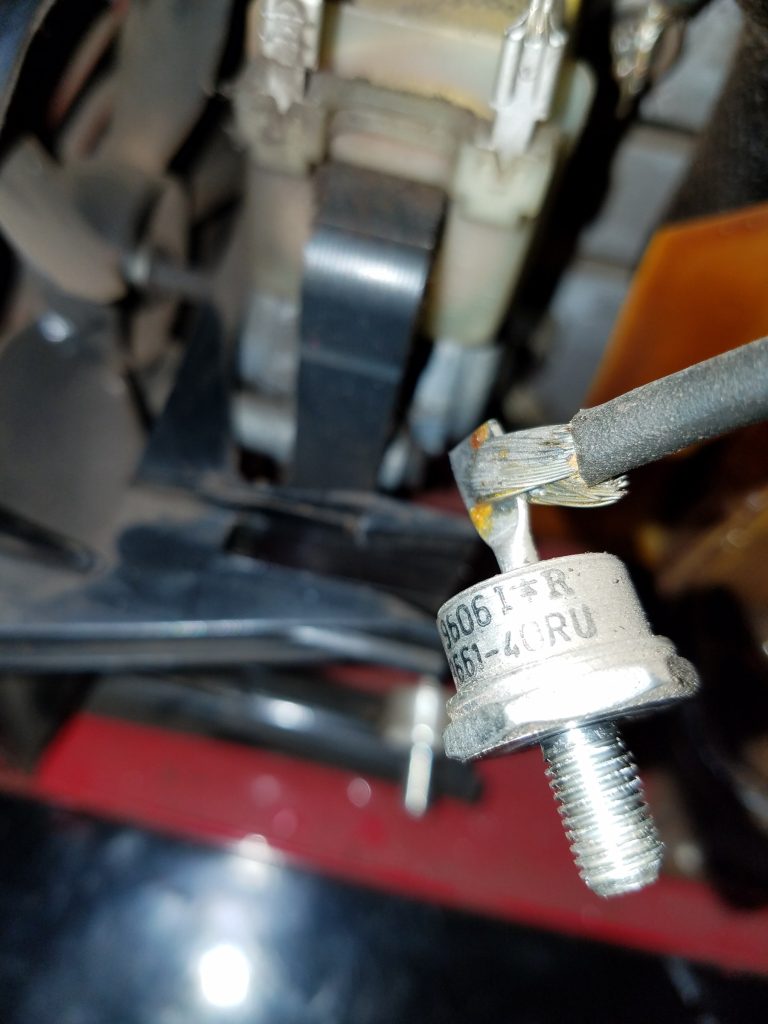
Two part numbers, M9661-40U and M9661-40RU, two of each. Same diode in opposite polarities, and each heat sink carries one of each. The 9606 and 9550 read like date codes: early 1996 and late 1995.
The second note is the diagnosis. A healthy diode shows a few tenths of a volt one way and blocks the other. D1 and D2 read 0.438 and 0.411. Fine. D3 read 0.000, a dead short. D4 read OL, which by itself doesn’t mean it’s bad necessarily, but I think I replaced two of them - ten years later I don’t remember exactly.
The diagram has one more thing in the fine print. Note N.D.: bolted aluminum connections require joint compound when reattaching. I talked to the shop where I get my welding supplies. Someone in the back knew diode changes in welders, and gave me a little squeeze pack of the right paste to do it properly.
One caution, because this is a story and not a repair guide. C1 on that diagram is a 59,000 microfarad capacitor, and capacitors hold a charge after the cord is pulled. If you don’t already know how to make one safe, don’t mess around with this!
The welder went back together and has worked great ever since. It’s coming on ten years in service since the repair, including home and business welding duty. Over the years, I’ve used it to weld multiple custom railing and gate jobs; vehicle and trailer mods and repairs; and all sorts of metal design and repairs.