
I commonly get questions about dry-on coatings (rubberized, paint, rust converter, encapsulator) alongside wet film lanolin coatings. Here’s a summary for starters:
- I generally don’t recommend adding any dry-on undercoating. If it isn’t perfectly applied and maintained, it can become a liability by trapping moisture and accelerating rust.
- Factory (OEM) dry-on coatings have the best odds. They go on new vehicles through dip or spray processes engineered for full coverage on perfectly clean metal.
- Aftermarket dry-on coatings raise the risk significantly, including rust converters and encapsulators. They can seal in traces of existing rust, can’t get perfectly complete coverage, and can get scratched or damaged over time to let moisture in.
- Wet film lanolin generally improves on all these counts except frequency of reapplication.
How dry-on coatings fail
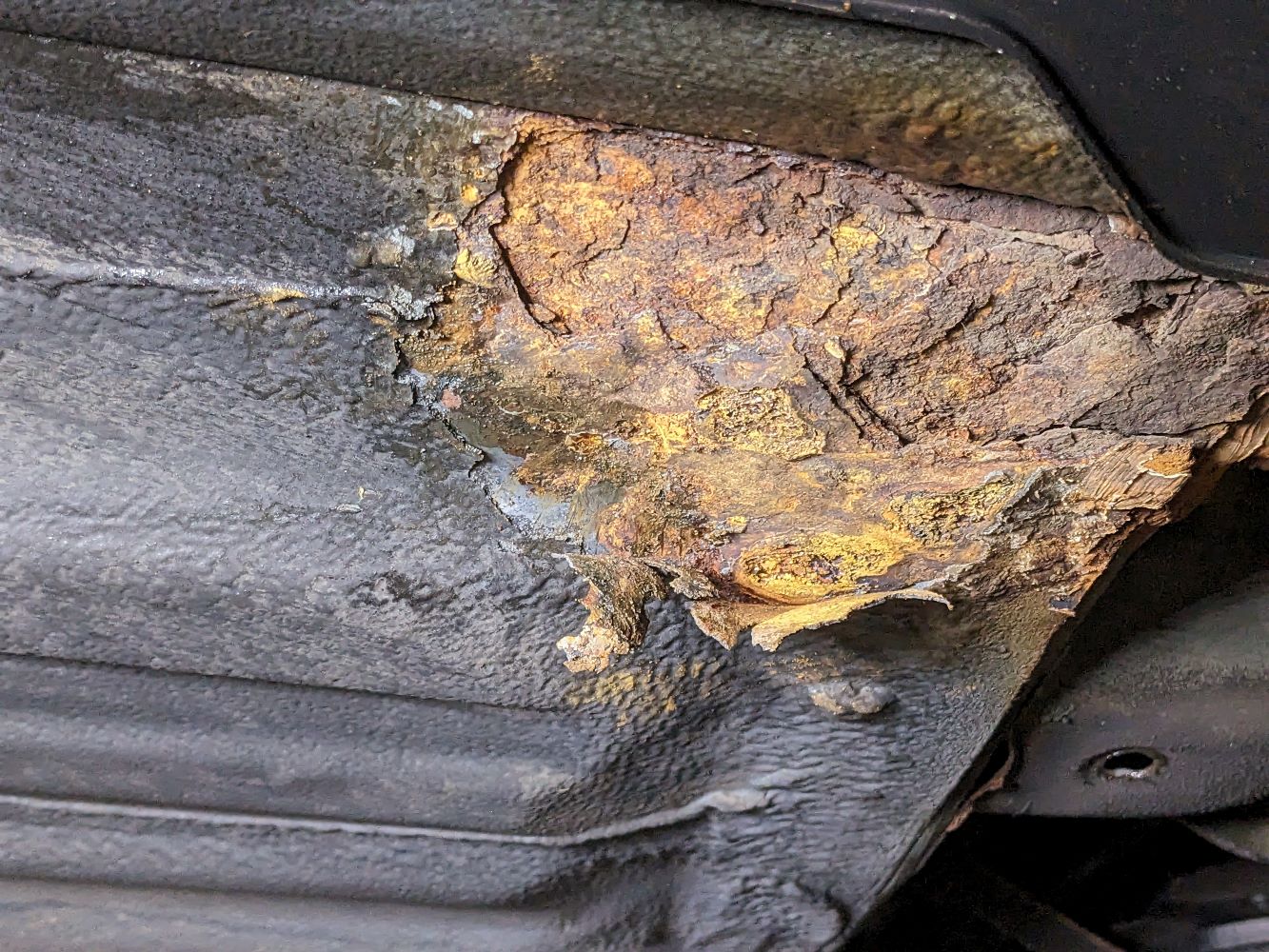
The main problem is that dry-on coatings can become a net-negative liability if they get scratched, worn, or miss even a tiny spot of bare metal. This will happen at some point - maybe on day 3 during the oil change on your mechanic’s lift, or year 3 when you ran over that weird thing on the highway, or later if you’re lucky. But as soon as it allows even a tiny amount of moisture to creep through and start oxidation, the coating seals that moisture in and speeds up the corrosion.
Furthermore, even with a high quality application, a spray gun can’t ‘see’ every angle. But water and salt spray will swirl its way up into every nook and cranny, including on top and inside of the underparts of your vehicle. So even in the best case, there’s a risk that moisture still finds its way behind the edges of your dry-on undercoating over time.
Four examples from the shop
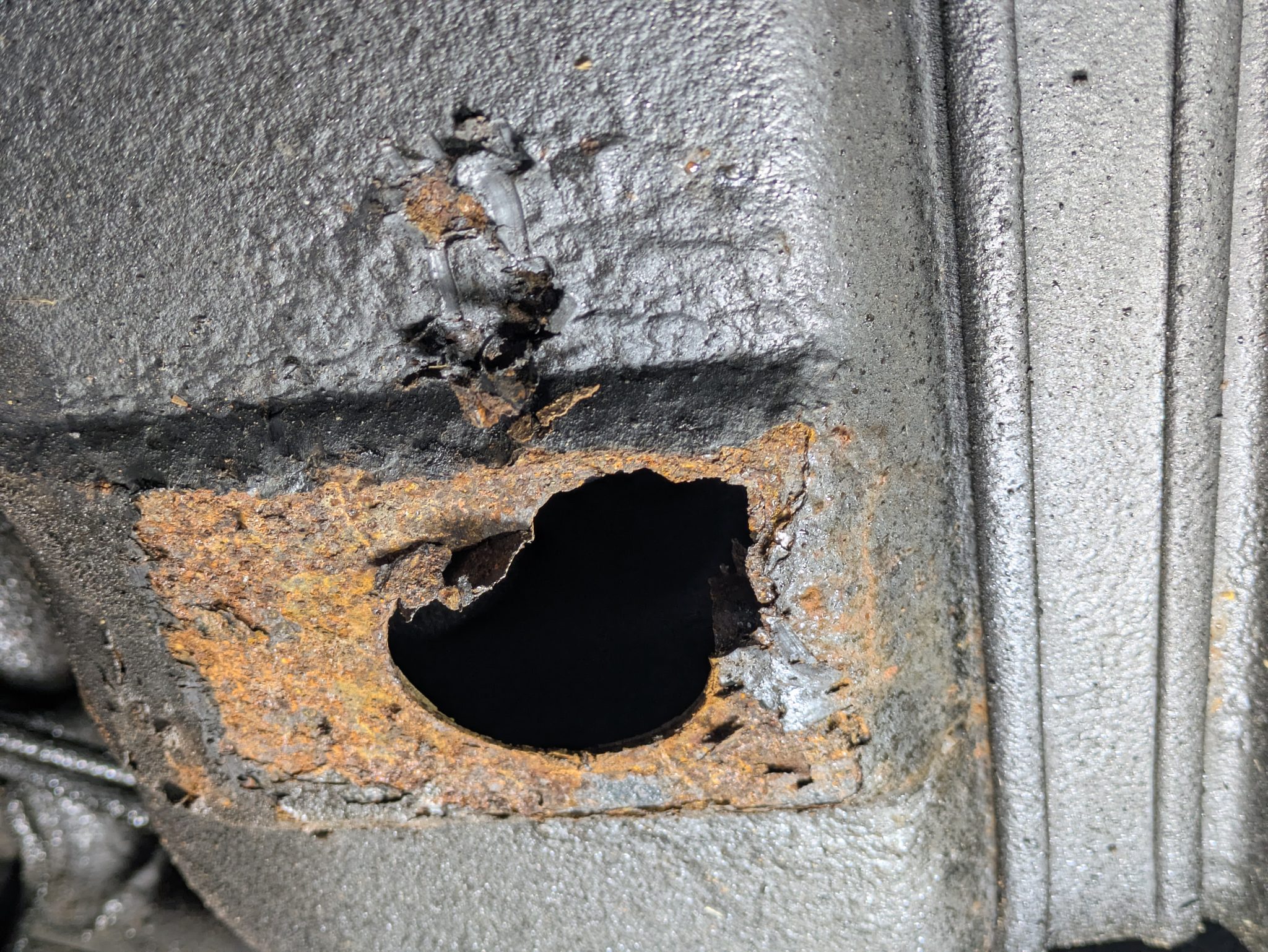
Rusted through in six places
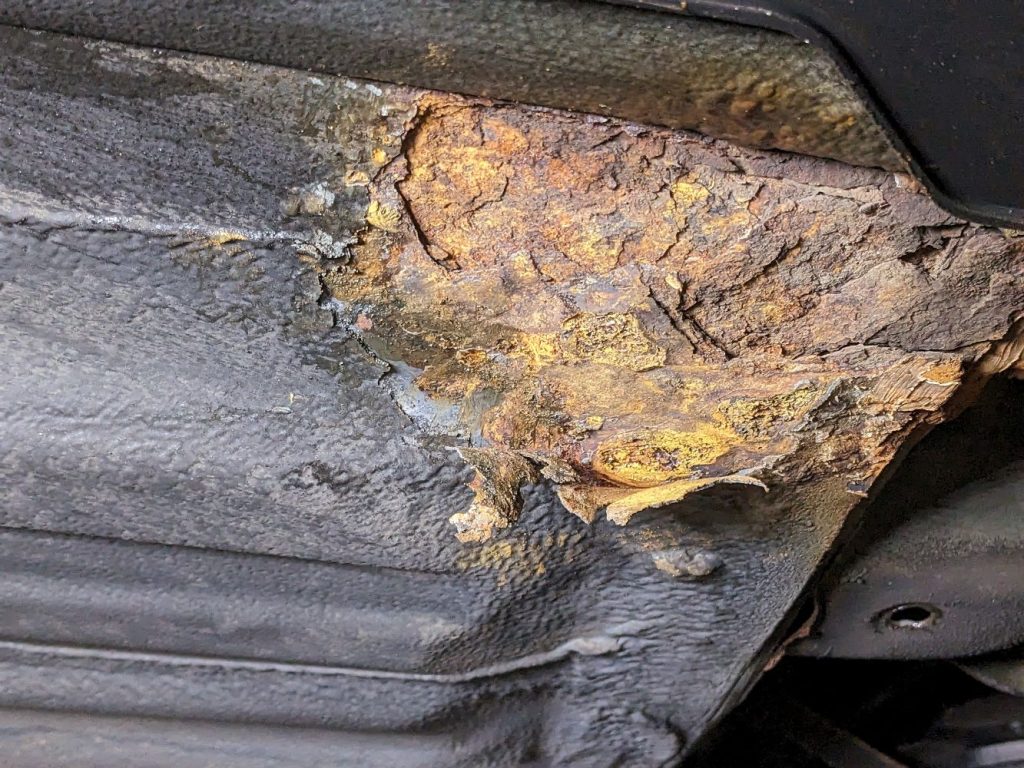
This is one failure point I’ve seen more than once. Peeling back the dry-on rubberized coating shows water ingress spreads rust very fast from even a small imperfection in the coating. This one was rusted completely through - I could push a finger through it - and it’s one of about six spots like it on this vehicle. Having seen this many times on dry-on coated vehicles - from OEM to aftermarket-applied - it looks to me like any dry-on coating is susceptible to this outcome after some amount of time.
Flaking off whole frame rail
In this clip I’m just blowing a frame rail with compressed air, and the old rubberized coating flakes right off to show how far moisture can spread rust across the whole rail, not just at a scratch or an edge. In this case, it almost looks like the coating was moisture-permeable evenly across its whole surface, considering how evenly it’s rusted underneath - possibly due to bad product or application from the start, or degradation over time.
Whatever the cause, the coating ended up just holding moisture against the steel and hid the damage. In cases like this, I would prefer that it had been left uncoated. Or even just one coating of wet film oil a decade ago would likely have improved on this result.
When dry-on blocks the oil
This older truck frame shows another side of the problem. At some point, likely a decade or two ago, this truck got a dry-on undercoat, and it also has evidence of a waxy, oil-type coating. Where the dry-on coating was still intact, it kept the wax from ever reaching the metal. And where the dry-on coating failed and let moisture in behind it, the rust kept going underneath, because the wax never got to the root of it. So a dry-on coating isn’t just a liability on its own - over the long run it can also keep a wax or oil coating from doing its job.
In the video you can see both outcomes side by side. Where the wax/oil coating remained, the metal held up well. Where the dry-on coating failed and the oil was gone, moisture got behind it and the rust went deep. This one apparently wasn’t recoated for many years, so the oil likely washed off in places.
Peeling off in sheets
This 22-year-old Land Cruiser has a very thick rubbery dry-on coating on the underside. Where the coating is fully sealed, it looks good. But it failed at some edges and holes, and once moisture is behind it, the coating holds it against the steel and it stays wet for longer periods of time. Like wearing a rubber coat or rubber gloves, where you can accumulate perspiration inside because it’s not breathable.
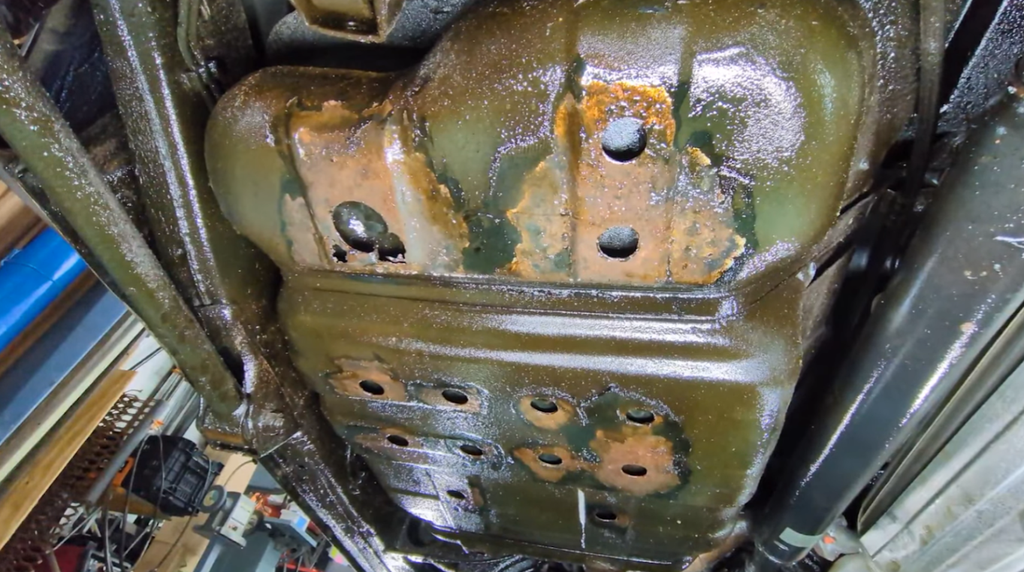
Furthermore, since we can’t see it, we don’t actually know if there are other places where it’s rusting through from above or behind. Even where the coating isn’t damaged, water can find ways to get on top of that metal. One of these spots had progressed to rust completely through and the rest is deep surface rust.
Before this one got its lanolin coat, I scraped and brushed off the flaking coating, leaving just some minimal surface rust so the oil could soak into the root of it.
This is why, in my opinion, you’re probably better off without any aftermarket dry-on coating. There may be some cases where it can be done thoroughly, but in general the long-tail risks seem more likely to be a net negative. Any dry-on aftermarket coating is usually a no-go dealbreaker for me if I’m shopping used vehicles.
Inside frame rails
Coating the inside of frame rails or unibody structure can be another problem for dry-on coatings:
- Spraying inside frame rails is a blind operation with any coating product, and getting a dry-on coating right in there is close to impossible.
- Too much coating and you’ll seal up smaller moisture exit points (an oil coating keeps flowing and coats those drain paths instead).
- Not enough coating, or missed spots, and you have exposed ingress points which will allow moisture to creep in and cause accelerated rust conditions.
Why touch-ups don’t work
Dry-on coatings are not forgiving with follow-up re-application or touch-up of any scratches or other gaps in coverage. For clean application and adhesion, dry-on coatings require full removal of any trace of rust, and cleaning of any grease or dirt. This kind of cleaning and prep is also effectively impossible inside of frame rails. Wet film not only self-heals, but can be easily restored or improved with additive re-application - just spray new oil on top of the old oil.
Rust converters and encapsulators
I would also apply most of the same assessment with consideration to ‘rust-converter’ or ‘rust-encapsulator’ products. Even sealed or painted over, they have the same problem as any other dry-on product. Any rust left unconverted, or sealed under a hard coating, is still exposed once moisture finds its way behind it. Same outcome: the coating holds the moisture in.
Cost and prep
Dry-on coatings are also much more costly to apply properly, so the ROI (return on investment) bar is higher than for a wet film lanolin undercoating. Especially in the case of a used car with existing rust, where sandblasting, washing, or other time-intensive prep is needed for dry-on coating.
Bottom line: wet film
While there may be cases in which a dry-on undercoating can be a net positive for some time, a wet film lanolin undercoating is the best defense against rust. Especially here in the salt belt, it’s an easy net-positive ROI recommendation to extend the life and preserve the value of our vehicles, new and old.