
Chlorine dioxide (ClO2) is an oxidizing gas used to eliminate odors in serious remediation work - flood damage, mold, and biohazard situations. It works differently than enzyme sprays, ozone generators, or activated charcoal - worth a try if you have something smelly in your car or other space.
When ClO2 gas contacts an odor-causing compound, it doesn’t just mask it or bind to it - it breaks down the molecular structure and converts it to odorless byproducts. It’s particularly effective against hydrogen sulfide (decomposition/rotten smell), ammonia (urine), and volatile organic compounds. It also kills odor-producing bacteria at the source by reacting with compounds essential to bacterial metabolism.
The gas-phase delivery is another big part of why it works. ClO2 fills a space the same way air does, so it reaches into foam backing under carpet, HVAC ducting, headliner materials - anywhere air reaches. Surface cleaners and enzyme sprays can only treat what they can physically contact.
Ozone is another gas-phase treatment commonly used for cars. It’s a stronger oxidizer but it can degrade rubber and plastics with repeated exposure. ClO2 works at lower concentrations, is gentler on materials, and handles a broader range of odor types. This may make it better option for vehicle treatment.
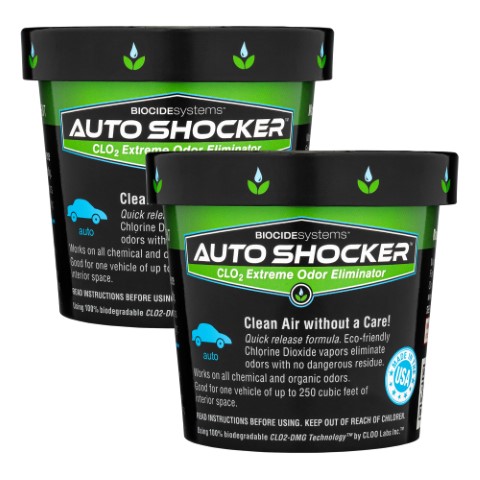
One consumer Chlorine Dioxide product I’ve used for vehicles and home spaces is made by Biocide Systems Auto Shocker - about $25 for one treatment. It comes in a small bucket. Open it up in a closed car or other space overnight, follow the instructions, and you should see pretty significant improvement.
I’ve successfully used it on a winter-stored car with a bad mouse infestation smells. After full interior detail including pulling and cleaning the carpet hadn’t fully removed the smell, the Auto Shocker worked to finish the job.
If you’ve done everything else and the smell is still there, this might be your next step.
Further reading: